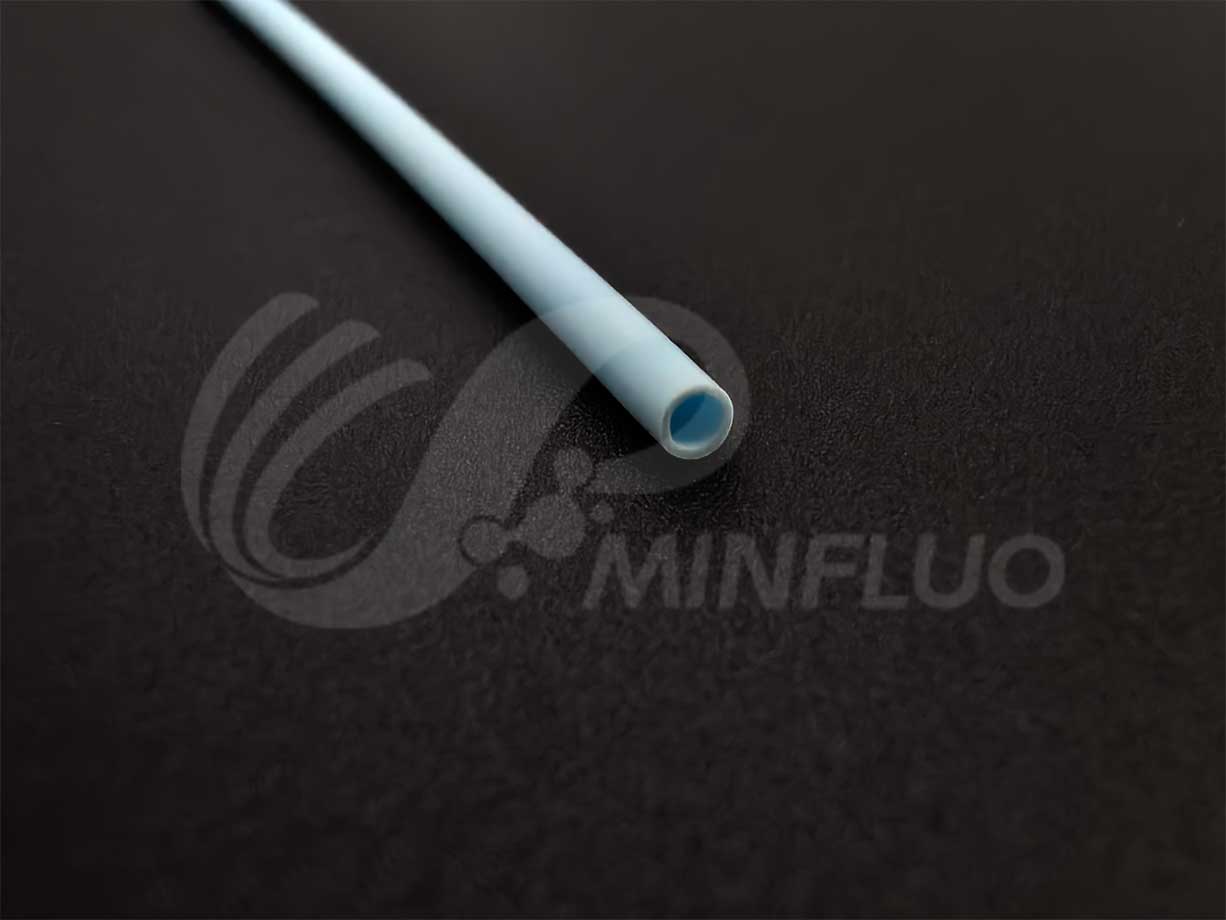
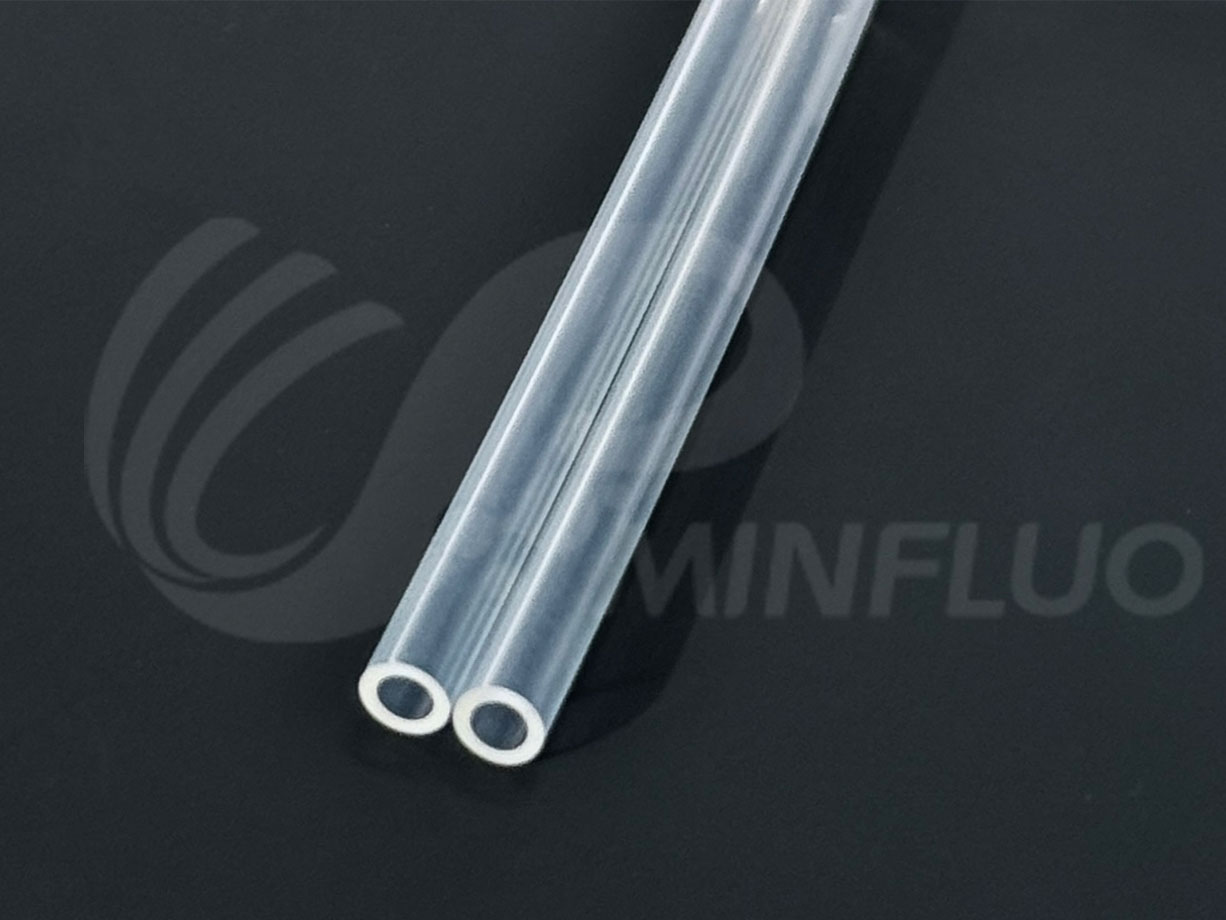
FEP Heat Shrink Tube: Material Characteristics, Functions and Application Domains
FEP Heat Shrink Tube: Material Characteristics, Functions and Application Domains
In the fields of electronic and electrical insulation, chemical pipeline protection, and precision mechanical packaging, FEP heat shrink tubing is a type of heat shrink sleeve made from fluorinated ethylene propylene copolymer as the base material, which undergoes irradiation crosslinking and expansion molding. Its core function is to uniformly contract radially after heating, tightly covering the surface of the protected object, providing multiple functions such as insulation, sealing, corrosion prevention, and mechanical protection. Compared to ordinary heat shrink tubes, the FEP material gives the product a wider operating temperature range, better chemical stability, and higher transparency, and is suitable for scenarios with higher requirements for reliability and environmental tolerance.
Material properties
The performance advantages of FEP heat shrink tubing stem from the molecular structure characteristics of the fluoropolymer material. The shielding effect of fluorine atoms on the carbon chain endows the material with excellent chemical inertness, making it resistant to most acids, bases, and organic solvents. It can maintain stable performance even when used in corrosive environments for a long time. At the same time, the intermolecular forces of the fluoropolymer determine its thermal stability, allowing the heat shrink tubing to maintain its shape and function within a wide temperature range.
The optical properties of FEP heat shrink tubing have distinctive features within the family of heat shrink tubing. Its transparent specification enables a clear observation of the state of the encapsulated components, facilitating installation inspection and subsequent maintenance. Moreover, the surface energy of FEP material is relatively low, featuring non-stickiness and hydrophobicity, which can prevent the attachment of contaminants. It has practical value in clean environments or applications involving liquid media.
Main Function
Insulation protection: The FEP heat shrink tubing has a high dielectric strength and volume resistivity. It provides reliable electrical insulation for wire connection points, terminals, and solder joints in electronic and electrical equipment, preventing short circuits and leakage risks.
Sealing and moisture prevention: After the heat-shrinking tube is heated and shrinks, the radial force causes the tube wall to closely adhere to the surface being covered, forming a physical sealing layer. This effectively prevents moisture and humidity from penetrating, and is suitable for electrical connection protection in outdoor and humid environments.
Chemical resistance: In chemical process equipment, FEP heat shrink tubing is often used to cover and protect metal components or sensors that are prone to corrosion, blocking the erosion of corrosive media, and extending the equipment's maintenance intervals and service life.
Mechanical protection: The inner layer of the heat shrink tube forms a continuous protective sheath after being wrapped, which can withstand slight mechanical scratches and vibrations, providing cushioning protection for precision components.
Typical application scenarios
Electrical and electronic field: Contact insulation protection for high-temperature or high-frequency wiring harnesses, sheaths for sensor leads, solder joint encapsulation on circuit boards, and sealing of connector tails. The transparent property of FEP is particularly suitable for situations where visual inspection of welding quality is required.
Chemical and Fluid Systems: Anti-corrosion sleeves for pipe joints, valve seals, and instrumentation. In high-purity processes such as acid and alkali transportation, solvent treatment, and semiconductor manufacturing, the low leaching and corrosion resistance of FEP heat shrink tubing meet the cleanliness requirements.
Aerospace and automotive industries: Wire harness protection for engine compartments, fuel systems, and high-temperature areas, as well as hydraulic pipeline protection. Its temperature resistance and oil resistance enable it to remain stable in various oil environments.
Medical equipment: Used for surface insulation and packaging of precision catheters, probes and miniature instruments. Its biocompatibility and smooth surface are beneficial in reducing tissue friction and bacterial adhesion.
Usage Notes
The use of FEP heat shrink tubing should follow the following basic guidelines:
Pipe diameter selection: Before making the selection, it is necessary to determine the contraction ratio and expansion inner diameter of the heat shrinkable tube based on the outer diameter and shape of the covered object. After contraction, the inner diameter should be smaller than the outer diameter of the covered object to ensure sufficient covering and clamping force.
Heating method: It is recommended to use a hot air gun or other constant-temperature heat source for heating and shrinking. The heating process should be carried out uniformly from one end to the other, to avoid local overheating which could cause the pipe wall to burn or result in uneven shrinking.
Shrinkage temperature control: The shrinkage temperature range of FEP heat shrink tubing has clear boundaries. If the temperature is too low, the shrinkage will not be sufficient and the coating will not be tight; if the temperature is too high, it may cause material decomposition or melting. The operation should be carried out within the recommended temperature range.
Storage conditions: It should be stored in a cool, dark, and dry place, away from heat sources and chemical reagents, and avoid long-term compression and deformation.
Preparation before installation: The surface to be covered should be clean, dry and free of oil stains to ensure that the heat shrink tube fits tightly with the base surface after shrinking.
Selection considerations
When selecting the model, the following factors need to be comprehensively considered: the highest and lowest temperatures in the usage environment, the types of chemicals that may come into contact, the requirement for transparency, the strength of mechanical protection requirements, the electrical insulation level requirements, and whether it complies with the safety and environmental protection regulations of specific industries.
Overall, FEP heat shrink tubing is a type of special heat shrink product that demonstrates advantages in harsh environments. Its performance characteristics make it a practical packaging protection solution in scenarios where it is necessary to meet requirements for wide temperature range usage, chemical resistance, and transparent visualization. Reasonable selection and standardized construction are the prerequisites for realizing its functional value.