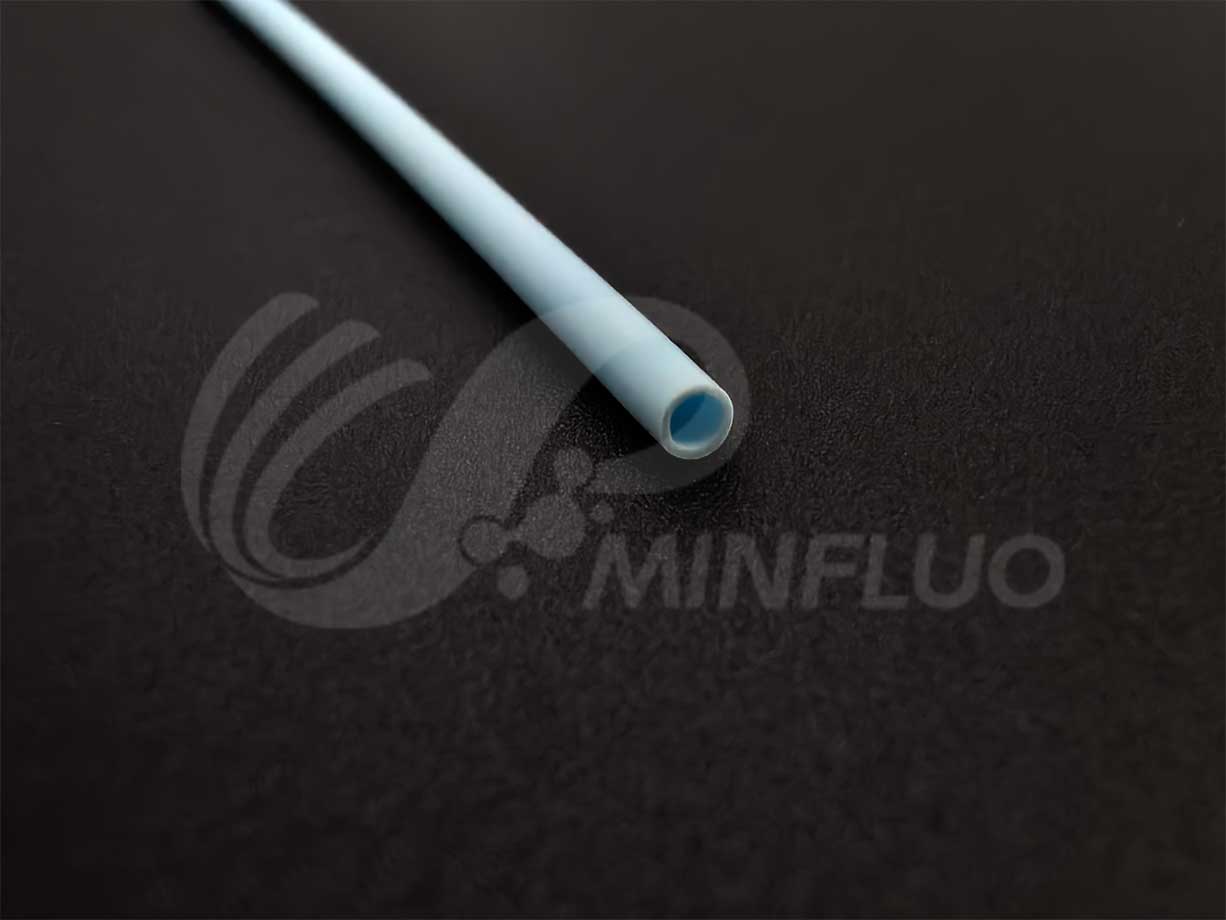
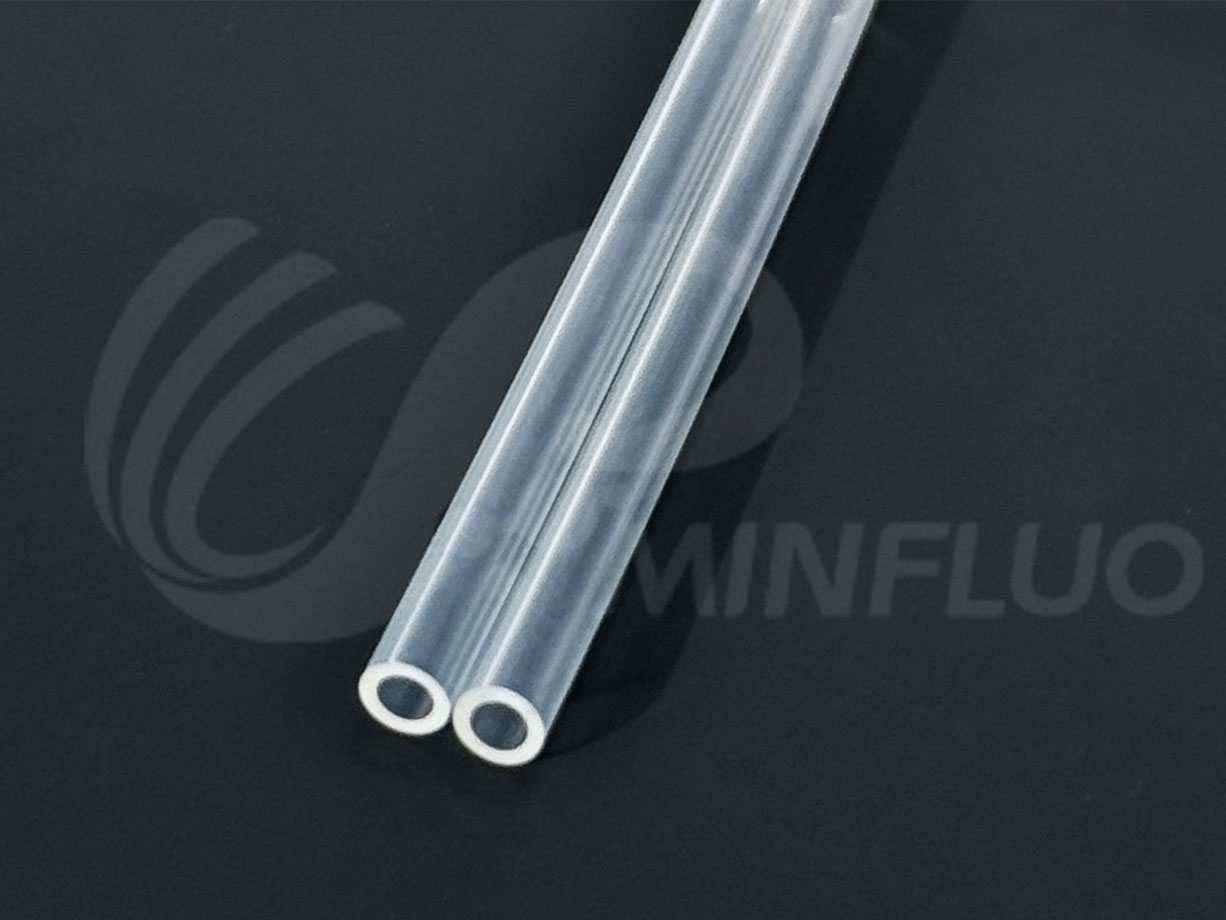
How is the PTFE multi-chamber tube produced? This article thoroughly explains the process.
How is the PTFE multi-chamber tube produced? This article thoroughly explains the process.
Mixing and pre-forming
The PTFE multi-chamber tube is made from polytetrafluoroethylene powder as the base material. First, the powder is mixed thoroughly with additives in accordance with the ratio to ensure uniformity of the material. The mixed powder is then left to stand and mature to eliminate the internal stress caused by the mixing process and stabilize the material's fluidity.
Subsequently, the powder is filled into a dedicated mold and pre-formed through compression molding to obtain a pre-formed body. The mold has a multi-chamber core structure, which is crucial for forming the porous channels. The pressing process is controlled smoothly to avoid core displacement and uneven wall thickness of the cavities. The pre-formed body must ensure structural integrity without delamination or void defects.
Pushing and forming and drying
The pre-formed body is sent to the pushing equipment. Under the pressure, it is pushed through the forming orifice mold to continuously extrude tube-shaped pre-forms with multiple independent inner holes. During the extrusion process, the pushing speed needs to be controlled to ensure synchronous formation of each cavity and prevent deviations in cavity wall thickness.
The freshly extruded raw tube contains additives and has a soft texture. It needs to be sent to the drying process to gradually remove the additives. The drying temperature rise rhythm should be gentle, as rapid heating can cause the tube to bubble and the cavity to deform. After drying, a stable raw tube is obtained.
Sintering, shaping and post-inspection
The dried raw tube enters the high-temperature sintering furnace and is heated and maintained at the set curve to allow the PTFE resin to fully melt and bond, forming a dense and stable tube structure. Sintering is the core process that determines the temperature resistance and corrosion resistance of the tube material. The temperature and holding time control are strict, and abnormal temperatures can cause cracking and cavity adhesion.
After sintering cooling, the tube undergoes correction and shaping to correct deformation and ensure the straightness of the multi-chamber channels. Finally, appearance and cavity inspection are conducted to check for blockages, cracks, and uneven wall thickness, and qualified products are cut into fixed-length finished products.
Process summary
The production difficulties of PTFE multi-chamber tubes lie in the positioning of multi-chamber cores, the synchronization of extrusion, and the control of sintering. Compared to single-chamber PTFE tubes, the multi-chamber structure is more prone to cavity eccentricity and cavity blockage problems, requiring higher mold precision and process stability. It is mostly used in fluid separation, insulation, and sealing scenarios.
If you need sample consultation, please feel free to contact us.